Rothman talks about the different components that do into making creative decisions and how that will impact the reaction of the person that is reading. Briefly he talks about the difference a black and white comic can be to a colored comic. I personally think that color is more appealing to look at. Howeve black and white, if used in a beautiful way, can be just as appealing. For example I will use two comics I I have at my home. One is and American comic, "harley quinn issue 1". This is a fully colored comic and is obvious how much time has been poured into it. also it is absolutely beautiful to look through. My other comic example is a Japanese comic, "One Piece vol. 1". This comic is black and white but is also very beautiful to look at. The black and white images leave for a lot of imagination for the reader. Overall, Rothman made a lot of points that I had not thought about before.
Showing posts with label Readings. Show all posts
Showing posts with label Readings. Show all posts
Monday, November 7, 2016
Reading: What is Comics Poetry?
I thought it was interesting when Rothman said that the earliest form of poem's came from oral traditions. It's quite obvious, but I just never thought about it in that way, and it make's a lot of sense. I also agree with Rothman's way of "defining" comics, which he said was "The form as one that uses images the way other kinds of writing use words". The reason I think that people understand comics almost intuitively, is because its made up of elements and sounds that they probably hear in their everyday lives. For example, when a comic artist writes "vroom" under a car you instinctually know that its the sound the car is making. Rothman described this a the comic artist creating a visual language, I never thought of it that way and it totally makes sense.

Thursday, October 27, 2016
Landscape: Research of Street
1. Buckminster Fuller was working from July 12, 1896 to July 1, 1983.
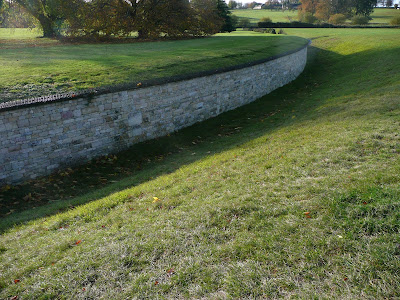
2. A ha-ha is a wall in a garden preventing someone from accessing parts of the garden. The special thing about ha-has though is that they minimize you're view obstruction.
3. Parco del Mostri, or park of the monster's, is located in Lazio, Italy. The park was commissioned in 1552 and may favorite image is the 'Orcus Mouth'.

4. Roman Forum is located in the city of Rome and was used for many centuries. The Roman Forum was to Rome what Central park is to New York City, it's a public place in the center on "downtown". I really just love looking at all the beautiful Roman architecture.

5. The Boboli Gardens was built around the 17th century and is located in Florence, Italy.

6. Jardin Du Luxembourg was built in 1612 and is built in Paris, France. My favorite picture go the Jardin Du Luxembourg is the Fountain of the Observatory.

7. Tivoli Garden was built in the 16th century in Rome, Italy. My favorite picture is the view of the garden with the Villa d'Estate in the distance.

8. Berrnini's Four Rivers was built in the mid 1600's and is located in the Piazza Navona in Rome, Italy. I absolutely love looking at the sculpture's in the fountain that Italy is so known for.

9. Jean Dubuffet's Jarden d'Emaille was built in 1974 in the Netherlands. I love looking at the contrast between the bright white and the dark forest in the pictures i've seen.

10. Stowe House was built in the 1500's in Buckinghamshire, England. My favorite pictures are the front of the house, showing the huge fountain and the house together.

11. Stourhead was built in the 1200's in Wiltshire, England. The pictures overlooking the late with the "temple of Apollo" in the distance are quite beautiful.

12. Meridian hill park was built between 1912 and 1940 and is located in Washington DC.


2. A ha-ha is a wall in a garden preventing someone from accessing parts of the garden. The special thing about ha-has though is that they minimize you're view obstruction.

3. Parco del Mostri, or park of the monster's, is located in Lazio, Italy. The park was commissioned in 1552 and may favorite image is the 'Orcus Mouth'.

4. Roman Forum is located in the city of Rome and was used for many centuries. The Roman Forum was to Rome what Central park is to New York City, it's a public place in the center on "downtown". I really just love looking at all the beautiful Roman architecture.

5. The Boboli Gardens was built around the 17th century and is located in Florence, Italy.

6. Jardin Du Luxembourg was built in 1612 and is built in Paris, France. My favorite picture go the Jardin Du Luxembourg is the Fountain of the Observatory.

7. Tivoli Garden was built in the 16th century in Rome, Italy. My favorite picture is the view of the garden with the Villa d'Estate in the distance.

8. Berrnini's Four Rivers was built in the mid 1600's and is located in the Piazza Navona in Rome, Italy. I absolutely love looking at the sculpture's in the fountain that Italy is so known for.

9. Jean Dubuffet's Jarden d'Emaille was built in 1974 in the Netherlands. I love looking at the contrast between the bright white and the dark forest in the pictures i've seen.

10. Stowe House was built in the 1500's in Buckinghamshire, England. My favorite pictures are the front of the house, showing the huge fountain and the house together.

11. Stourhead was built in the 1200's in Wiltshire, England. The pictures overlooking the late with the "temple of Apollo" in the distance are quite beautiful.

12. Meridian hill park was built between 1912 and 1940 and is located in Washington DC.

13.Viscaya Museum was built in Maimi because go the native woodland landscape. James Deering built Viscaya from 1914- 1942 and it is located in modern day coconut grove.

14. Fairchild tropical park was built in Miami because of the lush greenery and envoirment, and was named after good friend David Fairchild. The garden opened its doors in 1938.

Monday, October 24, 2016
Reading Response: "Green Dreams: Garden"
I think it's interesting how the author portrays the different gardens in this chapter. This style of writing really reminds me of Edgar Allen Poe, because of the attention to detail to create imagery. I like the atmosphere that this chapter gives off, it is almost dreamlike. Throughout the text, the author moves from place to place, explaining the individuality of the different gardens, and describes them as if they were cut away from time, like a sanctuary. At different times in reading this, I would wish that the author would be a little less descriptive, but in the end I actually enjoyed it.
My favorite garden out of them all was definitely the garden built by Orsini. I really liked reading about the dark mood it gave off. I can really picture "Orsini's park of monsters". I think I connected with this one the most, because I could really understand Orsini wanting to put his soul into his work. One of the structures described was really fascinating, the author describing an almost beast-like structure in the park. I think it is even more fascinating to imagine the whole garden filled with sculptures like that.
My favorite garden out of them all was definitely the garden built by Orsini. I really liked reading about the dark mood it gave off. I can really picture "Orsini's park of monsters". I think I connected with this one the most, because I could really understand Orsini wanting to put his soul into his work. One of the structures described was really fascinating, the author describing an almost beast-like structure in the park. I think it is even more fascinating to imagine the whole garden filled with sculptures like that.
Monday, October 3, 2016
Response: The Rhinoceros
I think it is easy to forget that people did not always have access to things like the internet, or anything visual for that matter. In 'The Rhinoceros" text, it's quite easy to understand that the people of this time had this non-visual handicap. Honestly, this text was very difficult for me to read, because of all the imagery. I actually have a comparison, this text distantly reminds me of Edgar Allen poe's writing, although "the Rhinoceros" takes this to a whole new level. Poe's work and "the Rhinoceros both go into extremely vivid detail in wanting to totally immerse the reader and, in this case, describe something for you to get a clear picture in you're head.
This text was easy to understand once I was able to put myself into 1515. I just had to push out my prior knowledge. If I didn't know what a Rhinoceros looked like, I would picture it differentially if I was just going off the text. I picture i've a lot bigger, and a lot more dangerous looking. This reading definitally gave me a more objectifing view of this topic and how to approch it
This text was easy to understand once I was able to put myself into 1515. I just had to push out my prior knowledge. If I didn't know what a Rhinoceros looked like, I would picture it differentially if I was just going off the text. I picture i've a lot bigger, and a lot more dangerous looking. This reading definitally gave me a more objectifing view of this topic and how to approch it
Monday, September 19, 2016
Pattern and Ornament: Response to "CAM Raleigh: Ornament and Pattern"
This article, 'Ornament and Pattern', was written by Susan Yelavich. The beginning of this article starts to talk about pattern and ornament as a whole and even get's into a little bit of its history. I found it fascinating that the perception of both pattern and ornament had changed so much over history. I would understand the gender specific connections but the perceptions of these two art forms took a political turn. The fact that a group of people, and I assume that the article is referring to a large majority of people, could condemn and a whole style of art just blows my mind! Also it was really cool to see Yelavich list out a couple of examples people have used ornament, I already knew that in old America people would use the pineapples as a way of welcome, but I had no idea about the others. A lot of this part of the article talks about the evolution of pattern and ornament due to the changing times. Machines were able to make the art that only craftsmen could before, therefore the lower class people could get a hold of these items because they were inexpensive. Also I still don't quite understand how these upper class people went from intricate patterns and ornaments, to modernism... I guess I'll just have to run with it.
Out of all the different types of ornament and pattern "sub-genres" I personally think I relate to Fantasy the most. The colors and oddities of it are definitely relatable to me. The Amplification "sub-genre" really reminds me of the metalwork that we went over in class. That's probably because of the contemporary feel though... The Everyday and Inheritances "sub-genres" seem very similar to me. They both in some way have a relation/connection to that past, and apply that. In the Everyday part of the article, the author refers to the fragile lace paper that the people in turkey drink on, and how it has changed over time. Overall this article was very informative.
Monday, September 12, 2016
Pattern and ornament: Response to Ivins, William M. "Ornament"
After reading this article I don't think I could quite agree with Ivins. Ivins talks about the differentiation between design and craftsmanship, comparing them to music and composers. This reminded me of the last topic where we discussed the 'difference' between art and craft, and that is precisely why I disagree with him. I understand that he is pointing out that they are two different set of skills. Ivins goes into detail, explaining the history ornament drawings and prints pertaining to etchings in furniture.
I do think it was quite interesting reading about the evolution of decorative art. I think it is easy to forget that people have been creating and making for thousands of years and we are just part of a long line of that. I personally never thought of art as a skill passed down over thousands of years of collecting knowledge, and to be honest when I do think of that my brain explodes. I enjoyed this reading, I respect anyone who puts as much pride into their work as Ivins does.
I do think it was quite interesting reading about the evolution of decorative art. I think it is easy to forget that people have been creating and making for thousands of years and we are just part of a long line of that. I personally never thought of art as a skill passed down over thousands of years of collecting knowledge, and to be honest when I do think of that my brain explodes. I enjoyed this reading, I respect anyone who puts as much pride into their work as Ivins does.
Sunday, August 28, 2016
Creative Impulse: Response to "Jerry Saltz on the Outsider Fair"
I hate that Artist's get pushed around, no matter what side of the spectrum they are on. I know Saltz says that in the end, the Outside Fair got moved to an amazing location, but they shouldn't be pushed aside in the first place. I keep hearing about this so called 'institution' of artists, but I do not understand the difference between the Institution and the Outsider artist's. Just because someone decides to remain a self taught artist, does not mean the people from this 'institution are better then them. I am personally a believer that you do not need art school to be an amazing artist.
I agree with Saltz when he talks about the slow deaths of the museums. people who do not get with the times are left behind. These old standards are just that... Old. For example, Romero Britto. He is totally rejected by the 'institution'. To me, that is incredibly wrong. Someone like Britto who has gotten so far into his career as and artist deserves to at least be recognized. Although it is on a much smaller scale, the same thing is happening to every single 'Outsider Artist'.
I agree with Saltz when he talks about the slow deaths of the museums. people who do not get with the times are left behind. These old standards are just that... Old. For example, Romero Britto. He is totally rejected by the 'institution'. To me, that is incredibly wrong. Someone like Britto who has gotten so far into his career as and artist deserves to at least be recognized. Although it is on a much smaller scale, the same thing is happening to every single 'Outsider Artist'.
Creative Impulse: Response to "The White Bird"
After reading "The White Bird", the first thing I thought about was evoking emotions. All artists, world renowned artists or graffiti artists, create emotions within the viewer. I thought it was interesting that Berger talked about symbolism and emotion, for example "a sunset is a reminder of fire and warmth". I never thought about symbolism this way before. Every person has there own experiences and will interpret things differently. Once I had this mindset, the article made much more sense to me. The white bird that hangs in many people's houses means something that is unique to them, the same as when someone looks at a piece of artwork and everyone has a different interpretation.
This article was a fascinating read, because of all the comparisons and the connections between aesthetic's. The article goes from talking about a lecture Berger thought about going to, to religious and also artistic point's of view. Berger's religious point's of view are very intriguing when tied in with the white bird. I don't think I would have read this article on my own, so I am happy I was able to read it.
This article was a fascinating read, because of all the comparisons and the connections between aesthetic's. The article goes from talking about a lecture Berger thought about going to, to religious and also artistic point's of view. Berger's religious point's of view are very intriguing when tied in with the white bird. I don't think I would have read this article on my own, so I am happy I was able to read it.
Wednesday, August 24, 2016
WARP First Post
Labels Help You Organize
All blog posts must be labeled with two keywords, which blogger calls Labels. When faculty visits your blog for evaluation purposes, we will use the labels to quickly find your work. If you do not use the keywords properly, we will not be able to find your work. Proper set-up and maintenance of your blog falls under the Research and Participation part of your grade which counts for 30% of the overall semester grade.
Topical Keywords
The first set of keywords correspond to the module we are working in. We will refer to these as topical keywords since they correspond to the topic we are exploring over the two-week periods. Your first group of posts will be labeled under Topic: Creative Impulse since this is the first topic (Topic #1). Here are the topical keywords you will use through out the semester:
Topic: Creative Impulse
Topic: Pattern and Ornament
Topic: Rhinoceros
Topic: Narrative
Topic: Landscape
Topic: Zine
Categorical Keywords
The second set of keywords will organize your posts according to kind. Here are the Keywords you will use for Labels:
Exercises - tag for posts documenting all assigned exercises. The first one will be the paper folding exercise from the first class.
Readings - tag for posts containing your two paragraph responses to the assigned readings. The first ones will be for "The White Bird" and the Jerry Saltz article from Vulture.com.
Small Works - tag for posts documenting all assigned small works. The first blog post labeled Small Works will contain images and accompanying descriptions of the three small works you complete for the Creative Impulse Module (Topic #1).
In-Depth Projects - tag for posts documenting all assigned In-Depth projects. The first blog post labeled In-Depth Projects will contain images (or video if appropriate) and accompanying descriptions of the more robust work you produce in response to the Creative Impulse Module (Topic #1).
Outside Visits - tag for posts containing your two paragraph responses to all required visits outside of the classroom. These include visits we do together as a class [during class time] or individually outside of class time.
Please be sure to use both a topical and categorical keyword when labeling your posts.
Subscribe to:
Posts (Atom)